 National Warta News
Related Articles


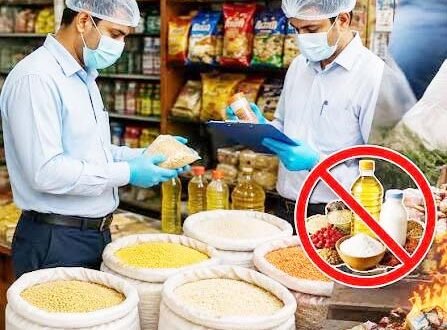
Opening a newspaper in the morning, particularly during festival seasons, one frequently encounters headlines such as “Spurious khoa destroyed by food-safety officials” or “Contaminated milk destroyed by authorities.” Such reports are no longer surprising. Food adulteration is often associated with a mismatch between demand and supply during festivals, but the problem is by no means confined to festive seasons. It is a persistent challenge that requires continuous surveillance rather than periodic campaigns. The issue is particularly important for Uttarakhand, a state whose economy and public life are deeply connected with tourism, pilgrimage, hospitality and food services.
The milk question
According to the Ministry of Fisheries, Animal Husbandry and Dairying, Govt of India Uttarakhand’s milk production increased from approximately 18.97 lakh tonnes in 2023-24 to 19.57 lakh tonnes in 2014-25 annually. At the aggregate state level, this appears encouraging. If daily consumption is taken at approximately 50.34 lakh kg and production is around 53.6 lakh kg per day, the state appears to have a modest surplus. But a state-level surplus does not necessarily mean that every district, city or market has an adequate supply. Rapidly growing urban and pilgrimage centres have consumption patterns that can differ substantially from rural production areas. Milk and milk products can therefore move into these markets from neighbouring regions of Uttarakhand and other states. The existence of inter-state and inter-district movement is not itself a problem; indeed, it is a normal feature of a modern food economy. The concern arises when the integrity of the supply chain is compromised. The temptation to make quick profits can encourage adulteration, dilution, substitution and the use of inferior or unsafe inputs. Milk is particularly vulnerable because it is consumed daily, in large quantities and by people of all ages. There have also been longstanding concerns in India regarding the misuse of veterinary drugs and hormones to increase milk production. Such practices should be addressed through scientific surveillance, veterinary regulation and testing. The fundamental principle must be that higher production cannot come at the expense of animal welfare or consumer safety.
The wider menace to food safety
Adulteration of edible products, the sale of substandard ingredients, use of stale food, repeated use of cooking oil, poor storage, contamination, incorrect labelling and unsafe food-handling practices can all threaten public health. Fruits artificially ripened or treated with prohibited or unsafe chemicals present another potential hazard. Repeated heating of edible oil is particularly relevant to street food and commercial kitchens. Likewise, inadequate refrigeration, poor personal hygiene, contaminated water and cross-contamination between raw and cooked food can turn an apparently ordinary meal into a health risk.
There is another problem that deserves greater attention: counterfeiting and deceptive duplication of consumer products. In some markets, consumers encounter products whose names, appearance or packaging appear deliberately designed to resemble established brands—for example, products referred to in the marketplace by names such as “Mangomod” instead of “Mango Mood” or “Run” instead of “Rin.” A similar-sounding name by itself does not establish that a product is counterfeit; that determination requires examination under applicable food-safety, trademark, consumer-protection and labelling laws. Nevertheless, where imitation is intended to deceive consumers, the problem goes beyond ordinary competition. A consumer purchasing what appears to be a familiar brand may have no idea that the product has been manufactured elsewhere, contains different ingredients, or has not been produced under the expected quality controls. The regulatory question should therefore be simple: What is written on the package, who manufactured it, what is actually inside it, and is the consumer being deliberately misled? Food safety must consequently encompass not merely adulteration but also authenticity, traceability and truthful labelling.
The Punjab warning
The experience of Punjab also deserves attention, although it should be interpreted with scientific caution. The Malwa region of Punjab has for years been associated with concerns about intensive agricultural practices with vast exposure to chemical fertilizers and pesticide that is the major cause of cancer in the region. The National Human Rights Commission intervened in 2012 following reports linking excessive pesticide use in the region with cancer and noted that large numbers of cancer patients were travelling from Bathinda towards Bikaner for treatment by a train popularly known as the “Cancer Train.” The broader lesson, however, is indisputable: what enters the agricultural environment can ultimately enter the food chain. Excessive or inappropriate use of pesticides, contamination of soil and water, residues in food and unsafe agricultural practices therefore require surveillance at source. This is precisely why food safety cannot be separated from environmental protection, agricultural policy, veterinary services and public health.
Food safety is a public-health issue
Food safety is no longer merely a question of hygiene or regulation. It is a fundamental issue of public health, consumer confidence, tourism, trade and good governance. The World Health Organization’s (WHO) latest estimates are alarming. Unsafe food causes an estimated 866 million illnesses and 1.52 million deaths every year worldwide. WHO also estimates that unsafe food costs the global economy about US$310 billion annually in productivity and medical expenses. Foodborne disease can damage tourism, trade and wider socioeconomic development. The burden is particularly severe among children. WHO’s latest assessment says children under five account for nearly one-third of foodborne disease cases, despite representing only about 9% of the world’s population. Chemical hazards such as lead and arsenic also contribute substantially to mortality and long-term health consequences. These figures make it clear that food safety is not a minor regulatory matter. It is a core component of public health.
The Tukaram Mundhe example
The recent work of IAS officer Tukaram Mundhe, Commissioner of Maharashtra’s Food and Drug Administration, sets example of a determined administrative leadership. Mundhe has adopted a highly visible, field-oriented and uncompromising approach to enforcement. Recent reporting indicates that under his leadership Maharashtra’s FDA has undertaken thousands of food-safety inspections and raids, covering street vendors, restaurants, large establishments and food-storage facilities. His approach has attracted considerable public attention and admiration, although it has also generated criticism from some businesses and legal challenges concerning particular enforcement actions. That aspect is important: strong enforcement must always operate within the law and remain subject to due process and judicial scrutiny. Mundhe’s example demonstrates that food-safety laws have little meaning if they exist only on paper. Regulations become effective when officials inspect the field, identify violations, act upon them and make the consequences of non-compliance visible. His willingness to take difficult decisions, despite a career marked by frequent transfers, has contributed to a public image of an officer willing to put administrative responsibility above convenience. His administrative approach underscores the larger principle: regulatory power must be strong enough to protect the public and disciplined enough to remain accountable.
What can Uttarakhand learn from the world?
Modern food-safety systems follow a farm-to-fork approach, in which responsibility extends throughout the food chain—from agricultural production and animal husbandry to processing, transportation, storage, retail and final consumption. The European Union provides a useful example of this integrated approach. Its official-control framework covers the agri-food chain and seeks to ensure compliance at different stages of production, processing and distribution. The message is clear that food safety monitoring should begin on the farm, at the dairy, at the slaughterhouse, in the warehouse, during transportation and at every subsequent stage until the food reaches the consumer. WHO emphasises stronger national food-control systems and foodborne-disease surveillance.
In Uttarakhand, need is to institutionalise the values that make regulation credible: integrity, impartiality, professional competence, visibility, transparency and accountability. Administration works best when responsibility is clearly fixed at every level of the chain of command. Instead of catching violations after they occur, the approach of risk assessment, prevention, surveillance, traceability and rapid response should be adopted. High-risk establishments should be inspected more frequently. Large kitchens, dairy units, meat establishments, sweet manufacturers, caterers and food businesses serving large numbers of pilgrims should receive particular attention. At the same time, establishments with consistently good compliance records should not be subjected to unnecessary harassment. This would transform food safety from a raid-driven system into a risk-management system. Food laboratories also need strengthening. Samples should be tested quickly, results digitised and enforcement actions tracked. Complaints should have a clear trail from registration to investigation and resolution.
The special challenge of Uttarakhand
Uttarakhand’s geography makes food safety particularly challenging. Mountainous terrain, dispersed settlements, difficult transportation, seasonal tourism and pilgrimage, temporary food establishments and rapidly changing demand create conditions unlike those in many plains states. The Char Dham Yatra illustrates the challenge. Food demand can increase dramatically along particular routes during the pilgrimage season. Temporary eateries, food stalls and accommodation facilities may appear rapidly, making conventional inspection mechanisms difficult. Uttarakhand therefore needs a specialised Tourism and Pilgrimage Food-Safety Strategy. Food vendors along major pilgrimage routes could be digitally registered. Basic food-hygiene training could be mandatory. Mobile food-testing laboratories could be deployed during peak seasons. Drinking-water sources could be tested regularly. High-risk establishments could be inspected more frequently, and repeated serious violations could attract stronger legal action. Food safety should become part of the tourism infrastructure just as roads, sanitation and emergency medical services are.
A coordinated campaign against counterfeit and spurious products
The fight should also extend beyond restaurants and kitchens. Uttarakhand’s markets need a coordinated mechanism to identify adulterated food, counterfeit products, misleading labels and unsafe consumer goods. Food-safety officials, police, legal-metrology authorities, consumer-protection agencies, local administration and trademark-enforcement mechanisms should be able to share information when appropriate. A suspicious product should be traceable through the supply chain: manufacturer → distributor → wholesaler → retailer → consumer. Technology can help. A consumer should be able to photograph a suspicious product and report it through a simple digital platform. The system should then help determine whether the product is genuine, properly licensed, correctly labelled and traceable. The objective should not be to intimidate small shopkeepers. Many retailers may themselves be unaware that a product is counterfeit. The emphasis should be on tracing the supply chain upwards and identifying those who knowingly manufacture or distribute deceptive products.
Conclusion
The ultimate objective of a food-safety drive should not be to conduct the maximum number of raids or issue the maximum number of penalties. It should be to create a food environment in which unsafe practices become increasingly difficult and safe practices become the norm. The experience of Maharashtra under the determined leadership of IAS officer Tukaram Mundhe, together with international approaches promoted by WHO and implemented through integrated systems such as the European Union’s farm-to-fork framework, offers valuable lessons for Uttarakhand. The state has an opportunity to make food safety part of its larger identity as a destination for pilgrimage, tourism, hospitality and wellness. A visitor should be able to eat at a roadside stall with confidence. A pilgrim should be able to buy milk or sweets without fear of adulteration. A family should be able to trust the label on a packet. A shopkeeper should be able to distinguish genuine products from counterfeits. And an honest food business should know that competitors who violate the rules will not be allowed to gain an unfair advantage. Ultimately, food safety is not simply about preventing food poisoning. It is about protecting human dignity, public health, consumer confidence and the reputation of the state.
Dr Prashant Thapliyal
Associate Professor
Army Cadet College
IMA Dehradun