 National Warta News
Related Articles


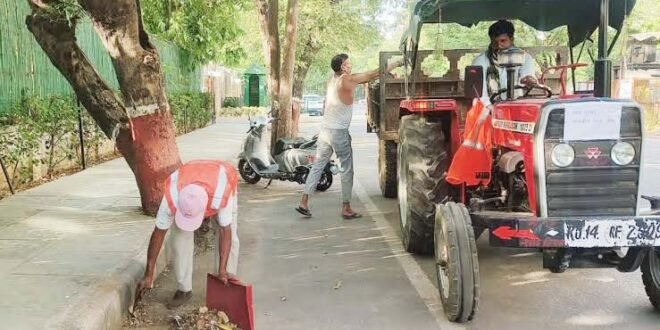
For a city like Dehradun, the capital of Uttarakhand and the gateway to several important tourist destinations, cleanliness is closely connected with public health, environmental protection, tourism and the quality of urban life. The DehradunMunicipal Corporation (DMC) therefore carries a responsibility that extends beyond routine sweeping and garbage collection.Dehradun has changed rapidly over the past few decades. Expansion of residential colonies, commercial establishments, educational institutions, traffic and tourism has increased the quantity and complexity of municipal waste. According to the Uttarakhand Urban Development Department’s current solid-waste-management dashboard, Dehradun accounts for about 737 tonnes of municipal solid waste per day, the highest reported generation among Uttarakhand’s districts. The same data identifies a processing/disposal gap of about 89 tonnes per day, demonstrating the scale of the challenge. Moreover out of the 1,300,062 metric tonne (MT) legacy waste; 902, 128.96 MT has been remediated and 397, 933.04 MT remains untreated.The city has nevertheless made efforts to strengthen its sanitation system. The official DMC Swachh Bharat Mission page records initiatives including source segregation, composting, underground dustbins, special cleanliness campaigns and scientific waste processing.
A changing approach
The concept of cleanliness has gradually moved from simply sweeping streets to scientific solid-waste management. The complete chain should ideally be:Waste generation → segregation → door-to-door collection → transportation → processing → recycling/recovery → scientific disposal.Failure at any stage affects the entire system.Recent developments indicate that DMC has been attempting to strengthen this chain. A 2026 report said door-to-door collection coverage had increased from 45% to 72% after the corporation took greater operational control of waste collection, while the vehicle fleet had increased and GPS tracking had been introduced. This is monitored by the Integrated Command and Control Centre (ICCC) established by DMC that officially became operational on August 1, 2025 in line with Indore waste management model to monitor door-to-door garbage collection and streamline city cleanliness. The report also described work on increasing the capacity of the Sheeshambada waste-processing facility and remediation of legacy waste.These measures are significant, but the real test will be whether improvements remain consistent over time.
From cleanliness drives to permanent cleanliness
Under the Solid Waste Management Rules, 2026, which came into effect from April, 1, 2026, emphasis has been placed on segregating waste into four parts -wet, dry (plastic, e- wate, cloth, card board, glass, metal etc.), sanitary & special care waste and accordingly there have to four dustbins at every household and establishment (green, blue, red and black respectively). One of the most important requirements for a clean city is segregation at source. Wet kitchen waste, dry recyclable material and hazardous or sanitary waste should not be mixed.If waste is mixed at the household level, separating it later becomes more difficult and expensive. Conversely, properly segregated waste can become a resource. Organic waste can be composted, while paper, plastic, glass and metal can enter recycling channels. DMC has considered incentives for source segregation, including a proposal to link rebates in user charges with better segregation. Such approaches could encourage citizens to participate rather than treating waste management solely as a municipal responsibility. Presently local garbage collection centre releases foul smell round the clock and it’s a sign that source segregation demands improvement.In Indore waste is collected in 06 different compartments and if it is not segregated at source, the garbage collection van does not pick it. Author met recently with Chief Municipal Health Officer (CMHO) of DMC Dr Anand Shukla and been informed by him that at every ward there is a provision of three sanitary supervisors-one looks after cleanliness of the ward, the second one mostly appointed by garbage collection company to supervise garbage collection and transport upto local collection centre and the third one to ensure that 100% door-to-door collection is ensured from every ward and for this to ensure he has to visit residents, monitor garbage vulnerable points (GVP) where residents throw their household waste at will and to motivate them with caution to give waste to the government collection van.He reiterated that strict monitoring will be observed in due course and it will take form of robust system despite facing several constraints.
Garbage and drainage
Plastic bags, wrappers and other discarded materials often find their way into drains and water channels. During heavy rainfall, blocked drains can contribute to waterlogging.Waste management, drainage maintenance and monsoon preparedness need to be coordinated rather than handled as unrelated activities.Special cleanliness campaigns can produce immediate results, but their long-term value depends on what happens afterwards. A garbage-vulnerable point cleaned today can become a dumping point again if regular collection, surveillance and public cooperation are absent.DMC has reportedly cleared numerous GVPs and placed others under monitoring. The next step should be to develop a ward-wise database of such locations and determine why dumping repeatedly occurs there.The objective should be zero recurrence, rather than merely repeated removal. Moreover the common cause of visible garbage is single use plastic (SUP) which mostly comes into the city from surrounding industrial areas. Dr Anand Shukla made a point that it would be curbed through strict vigil at the city outskirts till the situation improves.
Technology Intervention and citizens’ partnership
Modern technology can make municipal services more transparent. GPS-enabled collection vehicles can establish whether routes have been covered. CCTV cameras can monitor chronic dumping locations. GIS mapping can identify waste hotspots, while a responsive complaint system can allow citizens to report overflowing garbage points and irregular collection.Sanitation workers are the backbone of any cleanliness programme. They work in difficult conditions and may be exposed to biological and chemical hazards. Their safety, protective equipment, training and dignity must therefore be integral to municipal policy.Mechanisation and technology should reduce hazardous exposure while improving efficiency. No municipal corporation can keep a city clean if citizens continue to litter or dispose of waste irresponsibly.Resident welfare associations, market associations, schools, colleges, hotels, restaurants and offices can all contribute. Ward-level cleanliness committees could provide a practical platform through which citizens and municipal officials jointly identify local problems.Schools have an especially important role. Children should be taught not merely to repeat the slogan “Keep the city clean”, but to understand segregation, recycling, composting, plastic reduction and responsible use of public spaces. Periodic campaigns and conclaves with citizens’ participation should be organised. Strict vigil on littering, spitting and urinating on the streets should be observed. Those consuming chewable tobacco should carry a small bin with them for spitting and disposing it safely later. This way public places and conveniences will remain clean
Conclusion
Dehradun needs a long-term model based on five principles: segregate, collect, process, recover and monitor.First, source segregation should become universal. Second, door-to-door collection must be dependable. Third, processing capacity must keep pace with waste generation. Fourth, recyclable and organic waste should be treated as resources wherever feasible. Finally, municipal performance should be continuously monitored.The city also needs a special strategy for commercial establishments and bulk waste generators. Hotels, restaurants, markets and institutions can generate large quantities of waste and should have clearly defined responsibilities.Dehradun’s recent efforts indicate that the city is moving towards a more systematic approach to cleanliness. Its improvement in the 2024 Swachh Survekshan national ranking—from 68th to 62nd among the relevant big-city category—provides one measurable indication of progress, although rankings alone cannot capture the complete picture of municipal cleanliness.The real challenge is sustainability.A clean city is not one that looks clean immediately after a cleanliness drive. It is one where waste is prevented where possible, segregated at source, collected regularly, scientifically processed and responsibly disposed of—and where citizens themselves avoid creating the problem.For Dehradun and Uttarakhand, the ultimate objective should therefore be to transform cleanliness from amunicipal programme into a civic culture.The cleanliness of Dehradun should not be the responsibility of MCD alone. It should become a shared commitment of every household, institution, business and citizen who calls the city home.
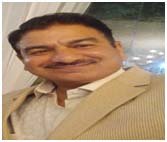
Dr Prashant Thapliyal
Associate Professor
Army Cadet College
IMA Dehradun